Elinor Makin
Artist Bio
Elinor Makin (b. 2000) is an artist living and working in South London. With her practice largely focused on sculpture and drawings, Elinor reflects on the passing of time, intuition and ephemerality through assemblage and often labour intensive processes. Elinor graduated from Camberwell College of Art in 2022 in Fine Art Painting. Since graduation her work has been included in a range of exhibitions across London in spaces such as HaArtslane & Safehouse 1&2.
Interview
Tell us about your studio. How long have you had it? What does it look like? How and why does it meet your needs?
I’ve been here at Streatham Hill for coming up to two years now. The opportunity came about when a friend, already at Streatham, let me know of a space that was being subletted. My space is very cosy with my working desk in the corner with a lot of drawings around me and then I also have a lot of sculptural parts and collections of materials around the studio that are ongoing works. Being located so close to my home in Brixton helps me have as much time in the studio as possible alongside work and other commitments.
How often do you visit the studio? What does a typical day or work session look like?
I work full time during the week so normally my time in the studio is spent in the evenings after work and on the weekend. I have some practices/ rituals that I do at home as well for when I don’t have time to get to the studio. In the studio I typically draw as soon as I get in, even just a small scribble. Often I’ll be working on different things/ materials and I quite like jumping between activities. I also try to let myself have the time to just sit and be with my thoughts.
How would you describe your art practice?
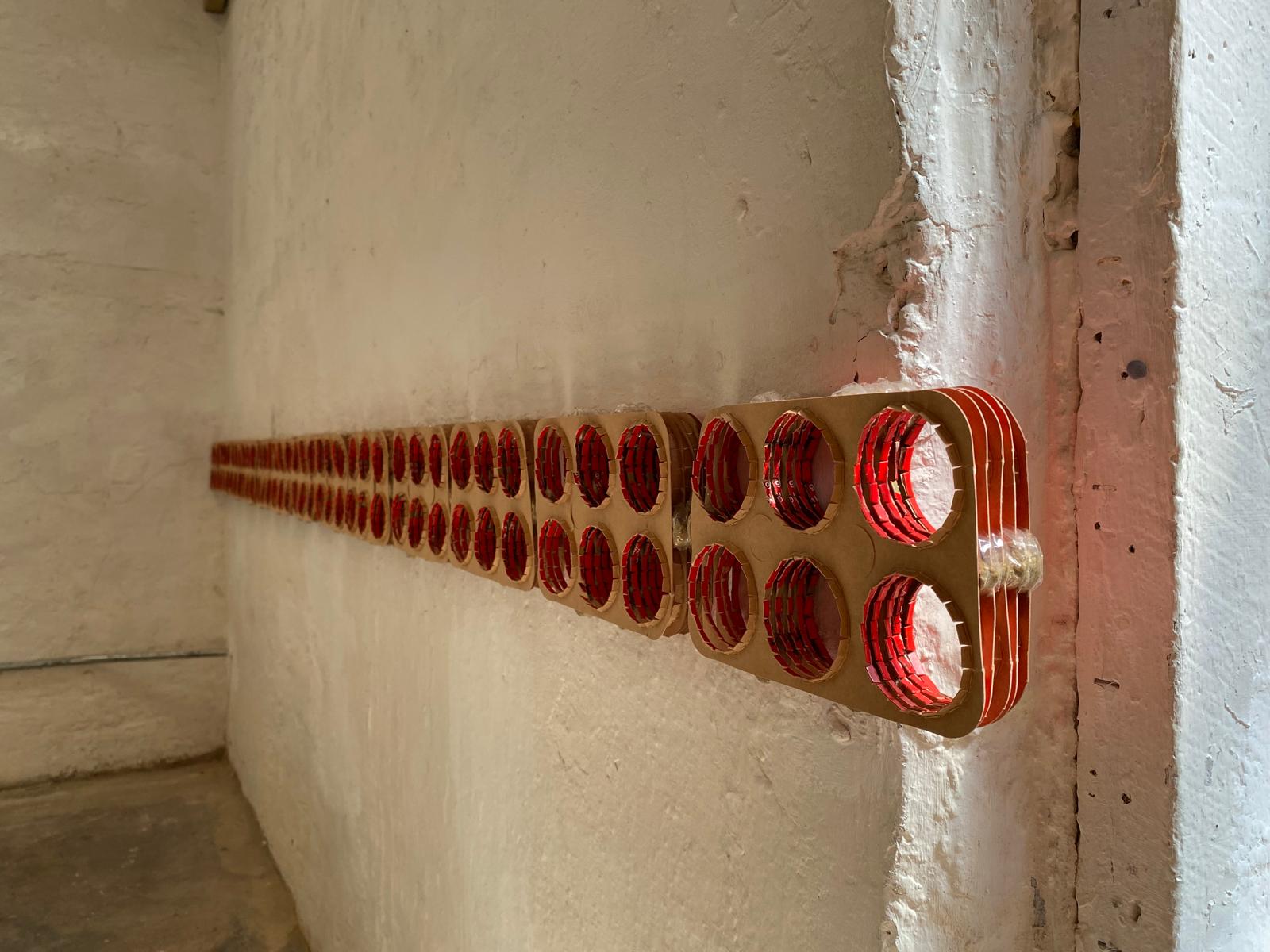
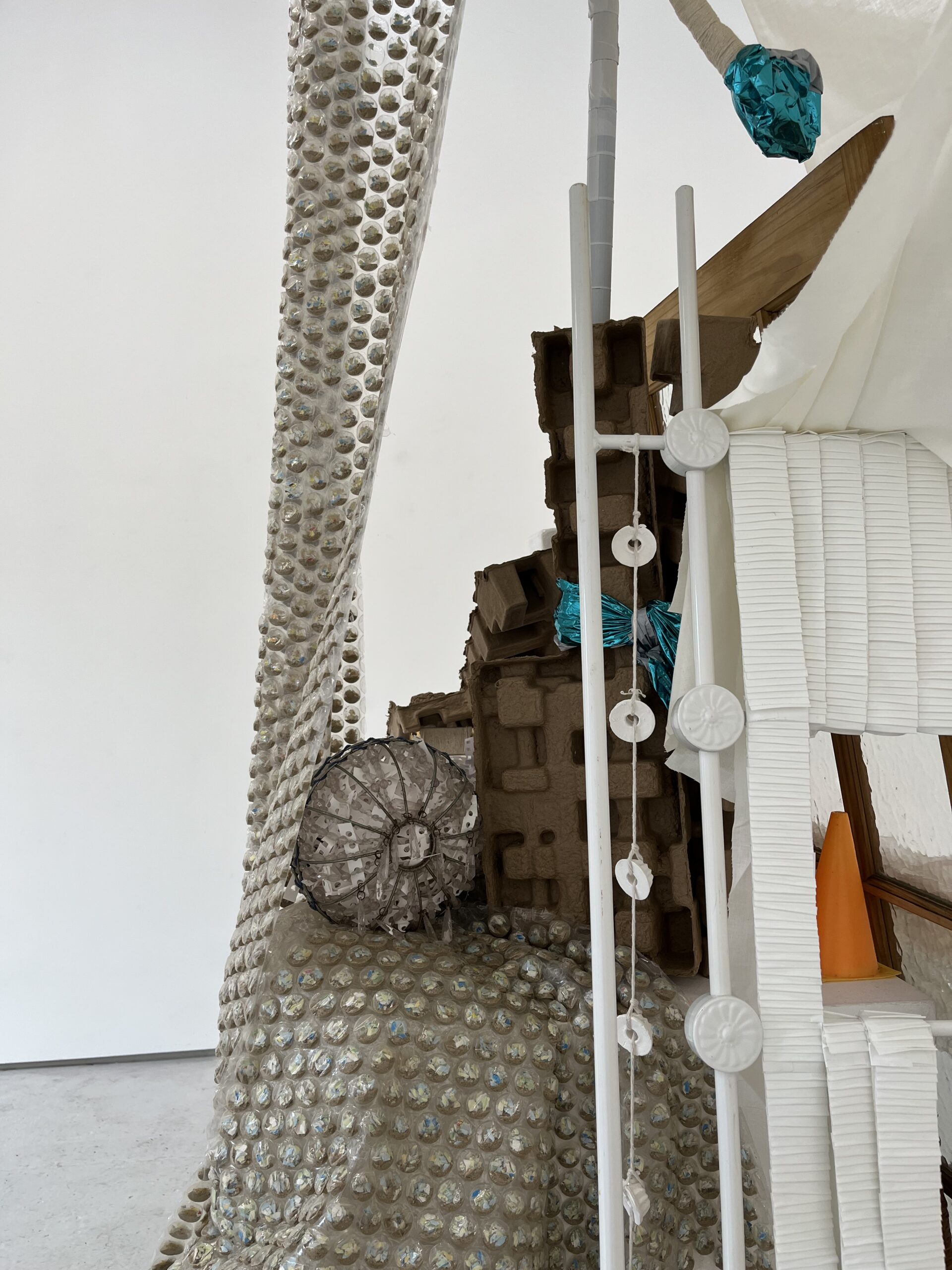
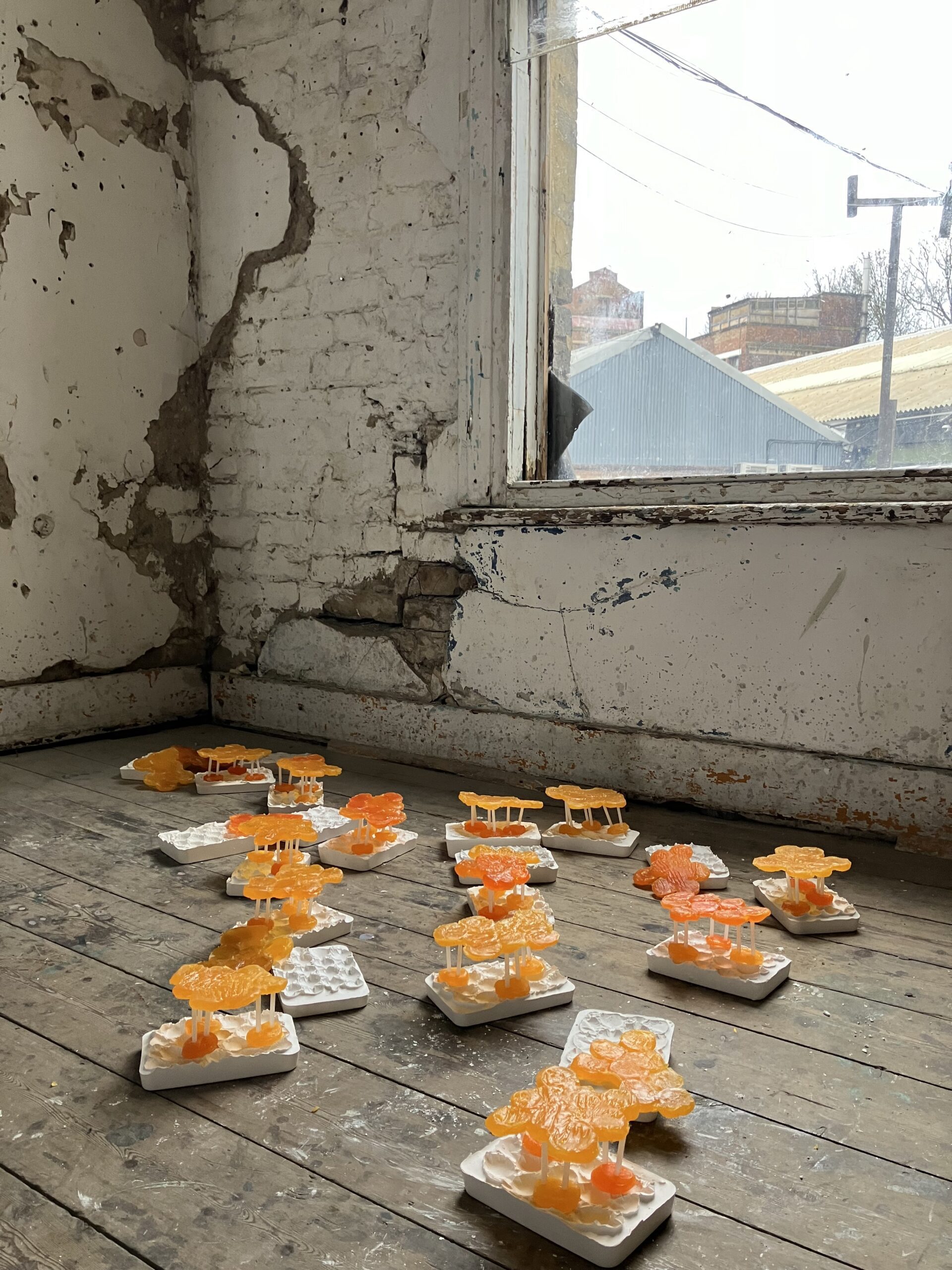
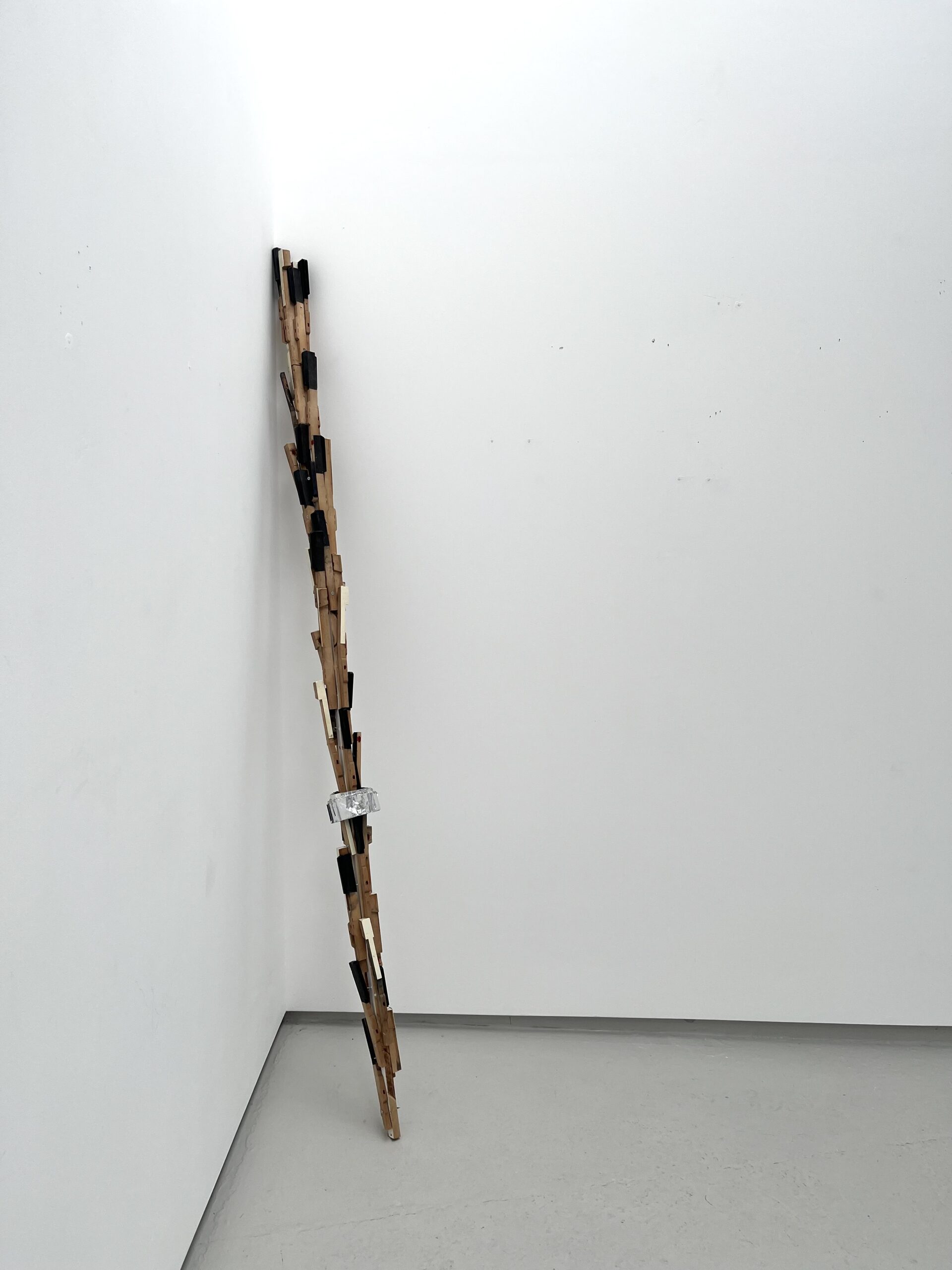
My practice varies largely with materiality but certain materials have stuck with me over the years and more so what I do with them. Things like folding tape and taping it on top of other tape which creates almost like a strip of scales. Or filling bubble wrap, most recently with sand but I have also used plaster injected with a syringe. Maybe the materials that reoccur and are there for the long run are often very labour intensive and repetitive. I’m drawn to these as a physical presentation of time and they are often the backbone to my sculptural pieces.
Where do you source your materials from?
I collect a lot of things, almost anything, ranging from receipts and postcards to metal hardware, bike lights and pieces of furniture. I think what I enjoy most is when other people save and collect things for me because it reminds them of me. My friend used to work at a restaurant where she would save the egg cartons and they were the most beautiful blue colour, these ended up being used to make my own paper for a book of drawings.
How do you choose your colours?
I think my relationship with colour is ongoing and ever changing which I find really interesting. Often colour is dictated over what found materials I am using, sometimes work is never colourful or maybe a slight injection and I think I can be fairly cautious towards it which is something I want to dig deeper with. I often find it a relief if a material I choose to include in a sculpture is brightly coloured, like duct tape. It feels like then the onus is no longer on me. I find that tension really interesting and something to unpick, perhaps something to do with synthetic versus natural and ideas of aesthetic. When it comes to drawing I normally always draw on coloured card because I find that less daunting and enables me to feel and draw forms with less hesitation.
How would you describe your relationship to technology?
In what ways do you use or reject it? I try to completely reject it. I think the rise of AI and the people behind who funds it really scares me, maybe that’s something to do with how tactile and labour intensive my practice is.
How do you decide when to pursue an idea and when to abandon an idea?
I don’t think I’d ever fully abandon an idea, sometimes ideas or maquettes of sculptures can lay dormant in the studio for a couple of years, but they always come to fruition eventually, even if it’s just one element of the idea.
When you’re facing a creative block or struggling with your practice, how do you overcome it?
Often drawing or doing something mundane but meditative in the studio and thinking about things as I do this. Sometimes I avoid writing about my practice and my thoughts when I feel really stuck but that’s often when it’s the most beneficial.
If you weren’t an artist, what would you be/do?
I think I would work in prison rehabilitation, helping people through their sentences and looking at ways to support people coming out of prison and readjusting to life outside. I currently volunteer in a South London prison where I visit people that don’t get a lot of social visits and feel isolated. I think I’d eventually love to run art workshops in prisons.
In what ways has being part of a community of artists at ASC shaped and/or informed your work?
Being able to bump into other artists in the studios are little interactions that really add up over time and build that feeling of connection and community. Also going to shows across ASC galleries, like the Pearlscent show last year at the Handbag Factory, have been a great way to meet other artists and celebrate their work.
Tell us about ways in which you have used the project space recently and plan to use in the future. Has having this facility changed or informed your work and practice in any way?
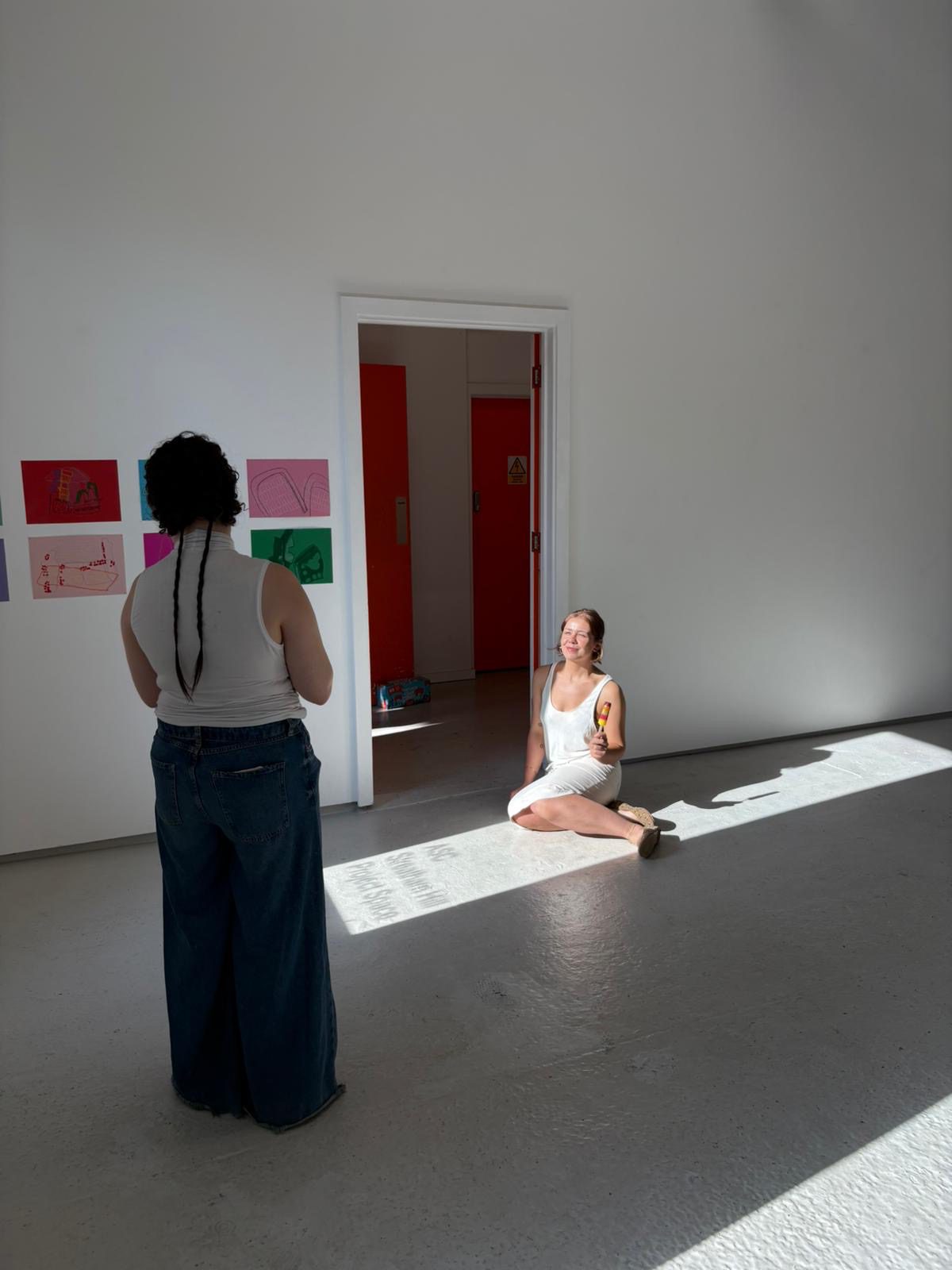
Most recently I held my first solo show in the space which was incredibly transformative, especially as a young emerging artist and in terms of accessibility. It provided me the opportunity to test scale within my practice and the work produced for the show was probably of the larger scale sculptures I’ve managed to exhibit. In the future I have plans with some local primary schools to facilitate a series of workshops thinking particularly about ways in which we can express landscapes with texture and tactility as an alternative to figures and pictures.
What is your earliest memory of making an artwork?
Using potatoes to make stamps with my aunties, they would always keep a lot of art supplies in their house for me to play with.
Why do you make art?
I make art to explore my curiosities with the world, my thoughts, my relationship to the world around me. And in turn, my art practice always keeps my curiosity going.
What are some challenges you currently face as an artist living and working in London?
We need more accessibility in artistic opportunities, we shouldn’t have to pay large fees to submit to open calls or be at a loss for finding affordable gallery space hires.
What would you like to see more of in your immediate neighbourhood and Lambeth at large?
For me personally, I’d love to see more open calls and commissions for making art for the community like outdoor sculptures and murals. I think a lot of artists would love the opportunity to provide their local area with art to fill their communal spaces.
Check out Elinor’s work via her instagram
Why not share this article?