
Sequestered Spaces – Fleeting Light
Artists Faris Nakamura & Bunga Yuridespita
Curator Beverley Harrison, Fascicle Contemporary
1st- 4th October 2026
Location: Gallery 1
Viewing hours: 10am – 5pm, Thursday – Sunday
Evening View: Thursday, 1 October 2026, 6pm – 9pm & Performance by Bunga Yuridespita, 7:30pm – 8:00pm.
Friday, 2 October 2026, 4pm – 5pm, Performance by Bunga Yuridespita
Saturday, 3rd October 2026, 1pm – 2pm, Performance by Bunga Yuridespita
Sunday, 4th October 2026, 11am – 1pm, Artist Roundtable Discussion with Coffee & Pastries
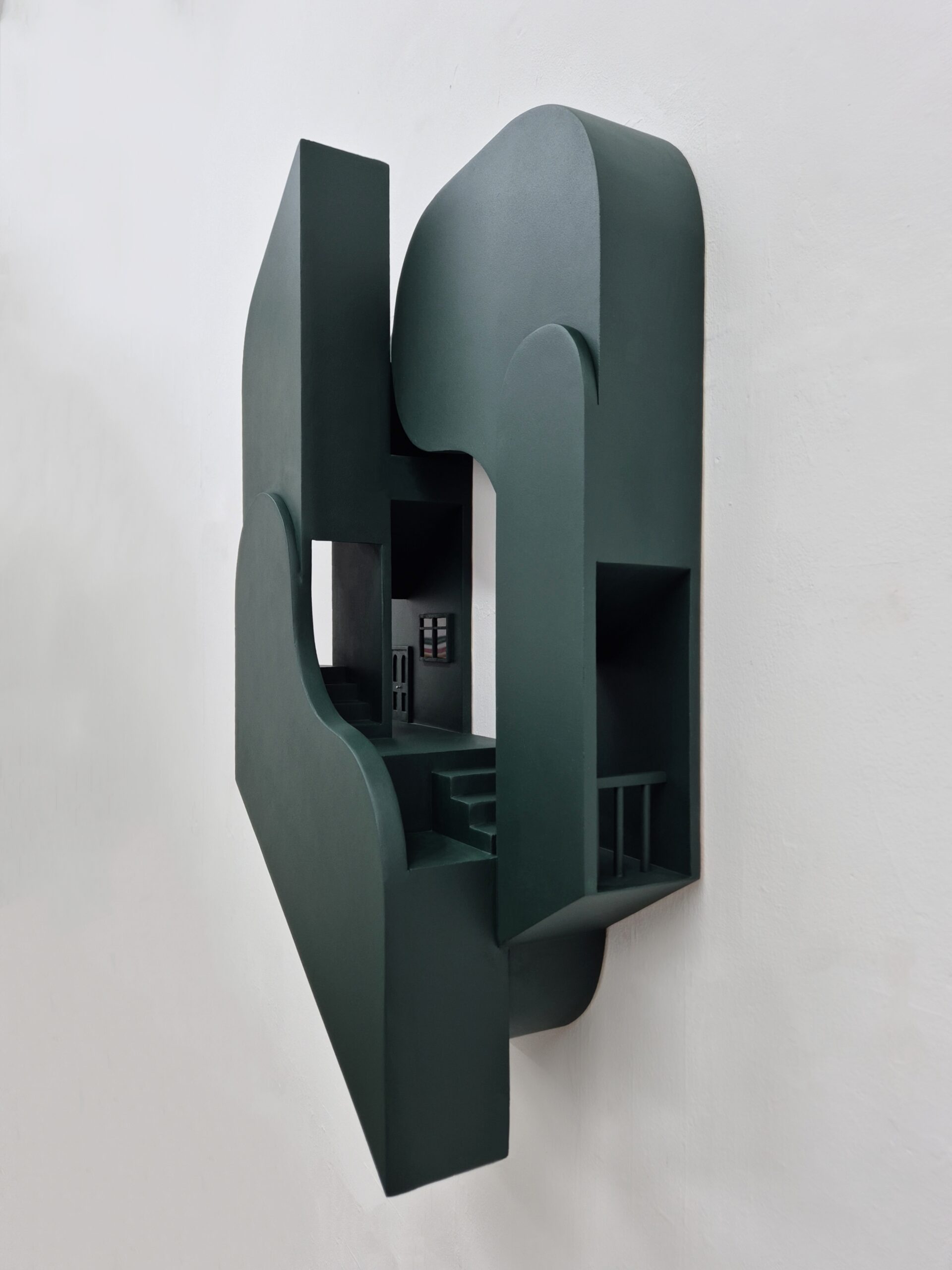
We construct sequestered spaces, safe havens in which the Self can reside, whether in urban architectures, rural countrysides, or within our minds. These spaces and edifices become concrete reflections and extensions of the Self, cultural identity and socio-political milieus. Faris Nakamura and Bunga Yuridespita’s sculptures’ architectural forms explore this phenomenon, to render tangible the intangible. What are architectural forms’ implications for identity? Their works explore these experiential nuances of space.
In collaborative tandem, Faris Nakamura and Bunga Yuridespita’s illusory architectural paintings and intermedia artworks explore urban spatial nuances, querying how social and personal spaces intertwine, function and are experienced. Their formal, abstract works open a dialogue on sequestered, liminal spaces of light, shadow and colour. Their works convey uncertain thresholds between secure and tenuous ways of being. Colourful sculptural paintings, performance and filmic media trouble Western one point perspective, presenting multiple vantage points and sightlines. Spatial ambiguity unfolds.
A Soft Space Opened Where None Was Promised, 2026 is a new collaborative work by Faris Nakamura and Bunga Yuridespita. Nakamura restages his freestanding skyscraper-like sculpture. Yuridespita’s filmic media Dance of Dimensions, 2024, streams into Nakamura’s two white wooden twin towers’ apartment-like interiors. The interior is visible through a waist high horizontal strip of glass. The filmic projection simulates light and shadow throughout the sculpture’s interior spaces. Fleetingly, it flashes internal movement throughout hallways and generic living spaces. The light’s movement choreographs a haptic illusion of walking through the space.
Nakamura’s geometric, monochromatic wall sculptures have minimalistic façades that conceal configured internal architectural spaces. Their abstracted organic shapes are potentially human and/or non-human. We look closely at the hidden spaces behind, to analyse their characteristics. Are these spaces places of refuge or avenues of escape? Their atmosphere is conveyed by light, shadow, and deeply saturated colour – metaphorically and figuratively. The spotlit sculptures caste a rhythmic constellation of light and shadow,
along two gallery walls.
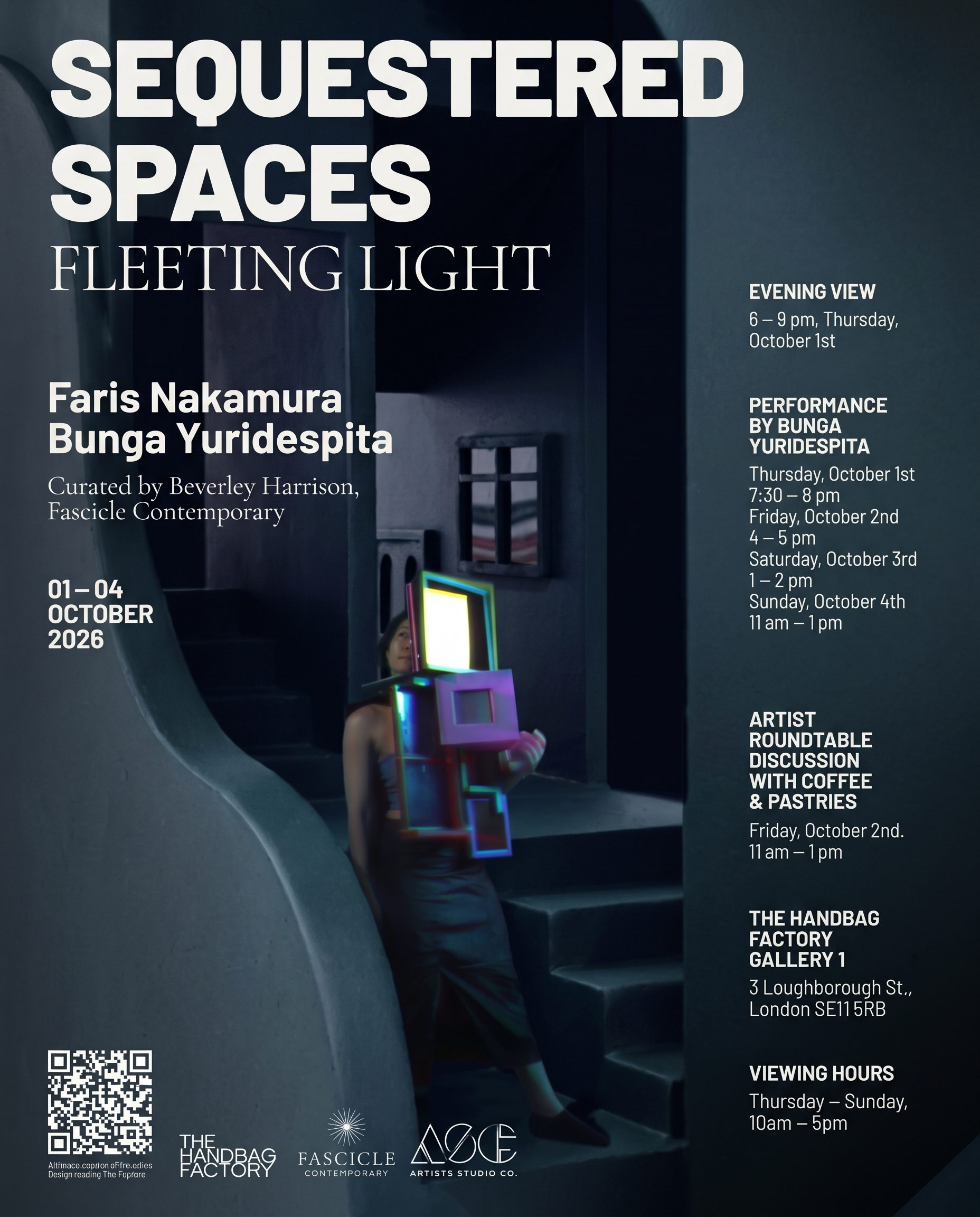
Yuridespita’s playful filmic intervention of urban and rural wanderings, I Did, 2026, acquires an interplay across the gallery with Nakamura’s sculptures. The film’s soundscape recounts the artist’s internal dialogue on cultural-psychological estrangement that lapses into adaptive kinship. In this outside-gallery performance, she wears a body sculpture with mirrors that reflect, not only the environment, but also the milieu’s social fabric of estrangement, association and/or interconnectedness. The environment is so ubiquitous as to placeless. Three live body-sculpture performances will occur in the gallery, to activate interconnectedness between the performing artist, the audience, artworks and gallery.
Combined, Yuridespita and Nakamura’s works discourse how societal architectures reflect socio-political spatial allocations and cultural attitudes. In turn, individuals carve out safe spaces. Nonetheless, they are continually impacted and defined, while sequestering refuge, within these spaces. In this sense, their works explore Foucauldian heterotopias and emplacements, places apart yet within society. Where and how do we find ways of inhabiting spaces, to protect and harbour the Self?
The nuances of architecture and the nature of spaces are explored, as we observe these artworks’ configurations. By looking closely, we explore our own stories and shifting perceptions. As well, we experience these works’ physicality, while exploring their uncertain, flowing passageways through unknown places. We probe societal urban and personal spaces’ character. In so doing, we imagine potential personal, socio-cultural and intercultural narratives, in relation to place. Is the space inclusionary, exclusionary, a place of refuge, isolation, acceptance or scrutiny? This exhibition is the second in a Fascicle Contemporary series on Fluid Architectures.
Curator, Beverley Harrison, Fascicle Contemporary
Why not share this article?