
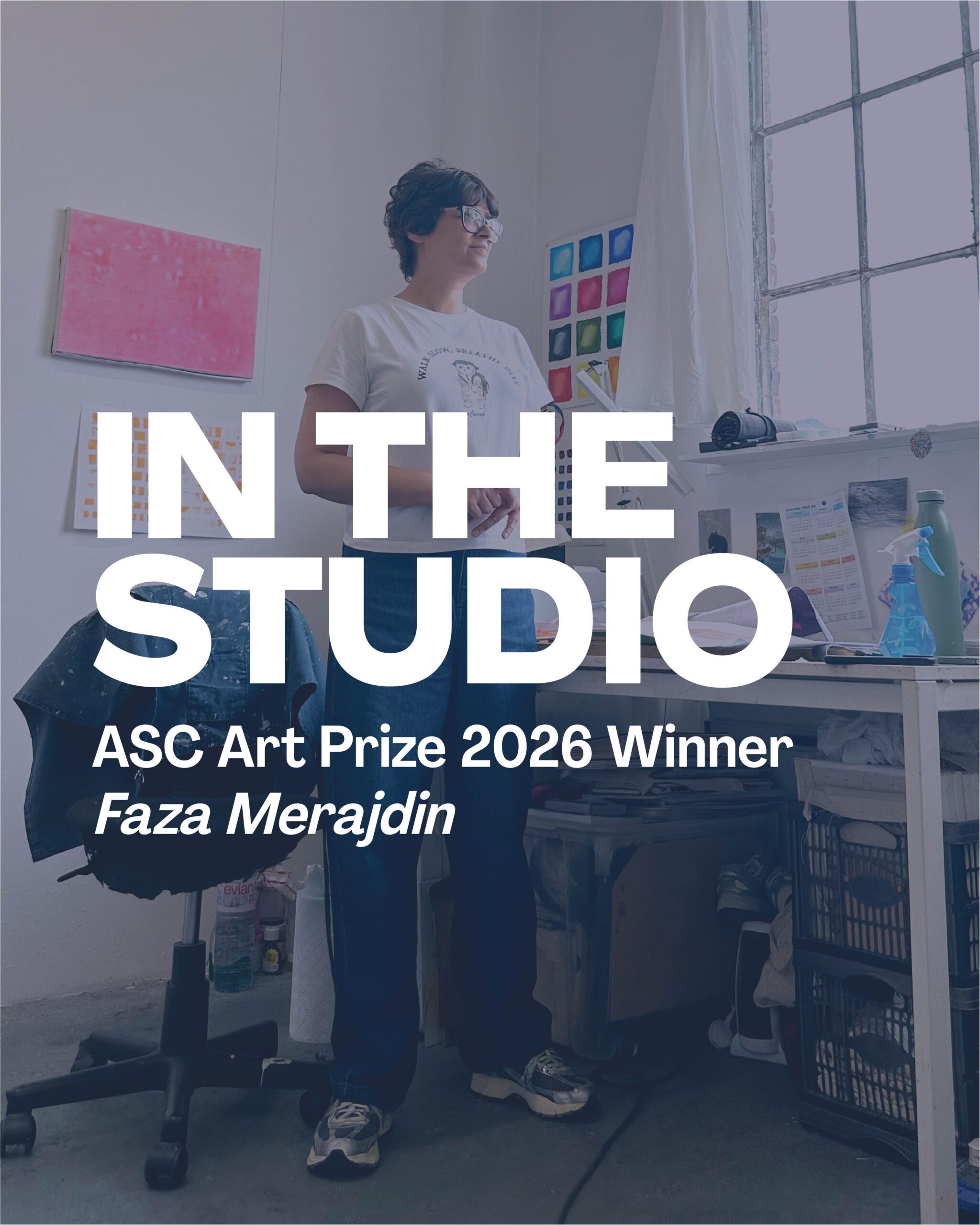
Studio Visit: ASC Art Prize 2026 Winner Faza Merajdin
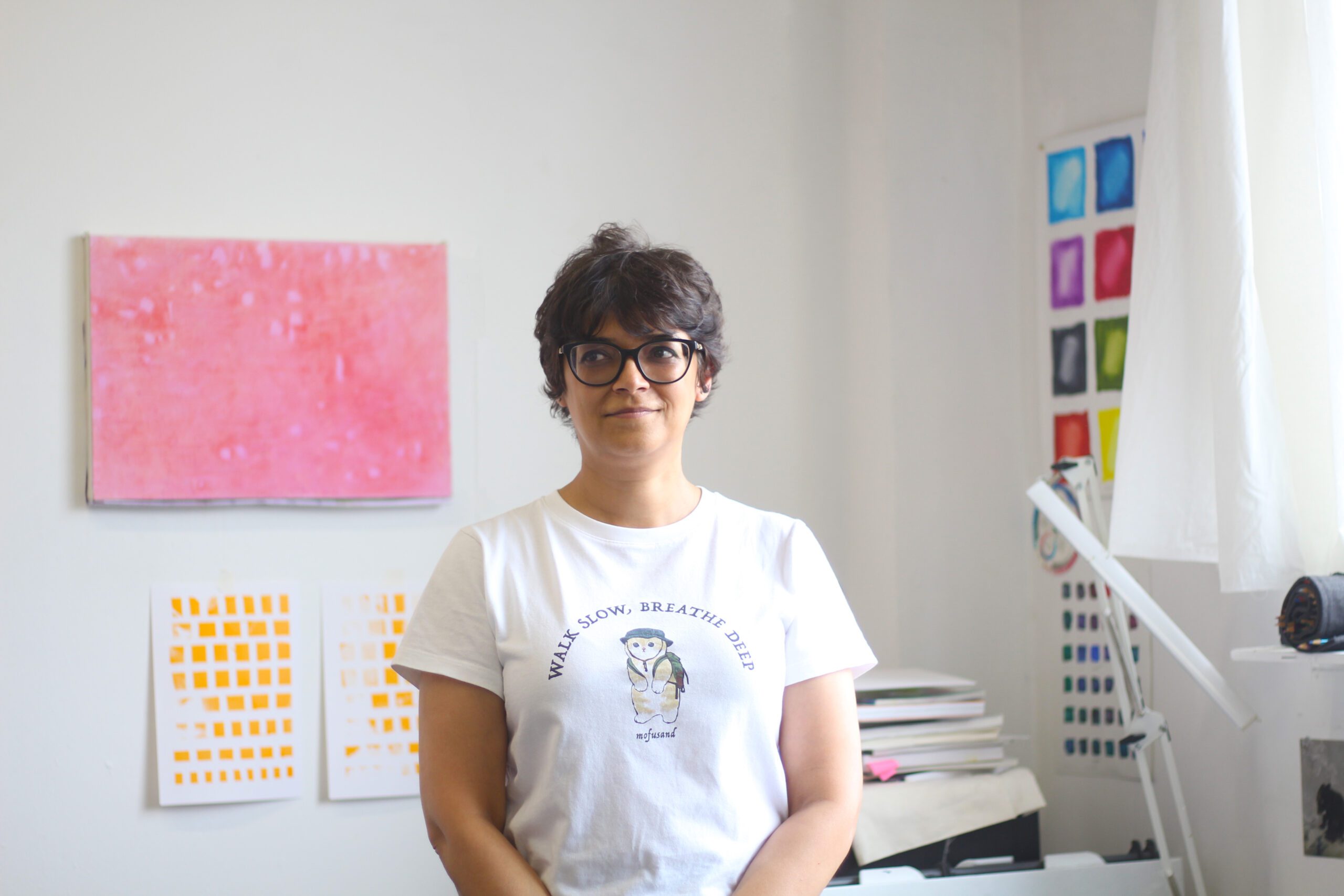
Faza Merajdin was named the winner of the ASC Art Prize 2026, receiving the £1,000 award. Created as part of our Open Studios event, we selected 10 finalists from over 400 artists across our eight participating buildings before choosing Faza as the overall winner at our prize exhibition. We recently visited Faza in her Empson Street studio in East London to discuss her journey, her creative process, and what winning the award means for her practice.

Could you introduce yourself and tell us a bit about your journey as an artist leading up to today?
I am a UK-based painter with a studio in east London. I graduated from the Slade School of Fine Art in 1997 and, since then, I have worked in the spa and wellness industry alongside maintaining my painting practice.
For many years, I continued to paint from home. However, about 13 years ago, I felt ready for a more dedicated studio space because working from home had begun to feel limiting, both practically and creatively. Since then, I have continued to explore and develop my practice.
Your work deeply explores light, geometry, and spatial experience. What first drew you to these themes?
I thought I would spend all four years in the life room at the Slade but I didn’t quite make it as they had other plans for us in our first year. We were set projects and introduced to different departments. I spent some time in the print room. This gave me an opportunity to work more experimentally and to think about light independently of the figure— as an almost pure experience.
That year, I travelled to Kenya to visit family and began to notice the use of Jaalis in everyday architecture, and their relationship with light. One experience in Mombasa has stayed with me. I was in a hot, noisy and claustrophobic indoor market when light filtering through its partially screened walls suddenly made the space feel bearable. Flecks of light moved across the piles of food and through the crowds, somehow diffusing the chaos.
Since then, I have continued to work with the jaali, exploring the way it interacts with light and how this can transform a place and a person. Previously, I have used more ornate patterns as this was a way for me explore my own heritage. Recently I have moved towards a simpler arrangement of horizontal and vertical lines because I just want it to be primarily about the light. Colour is also integral to my work. I use it to create spatial tension and a sense of movement.

When you first started making art, did you work in completely different mediums or styles before landing on your current practice?
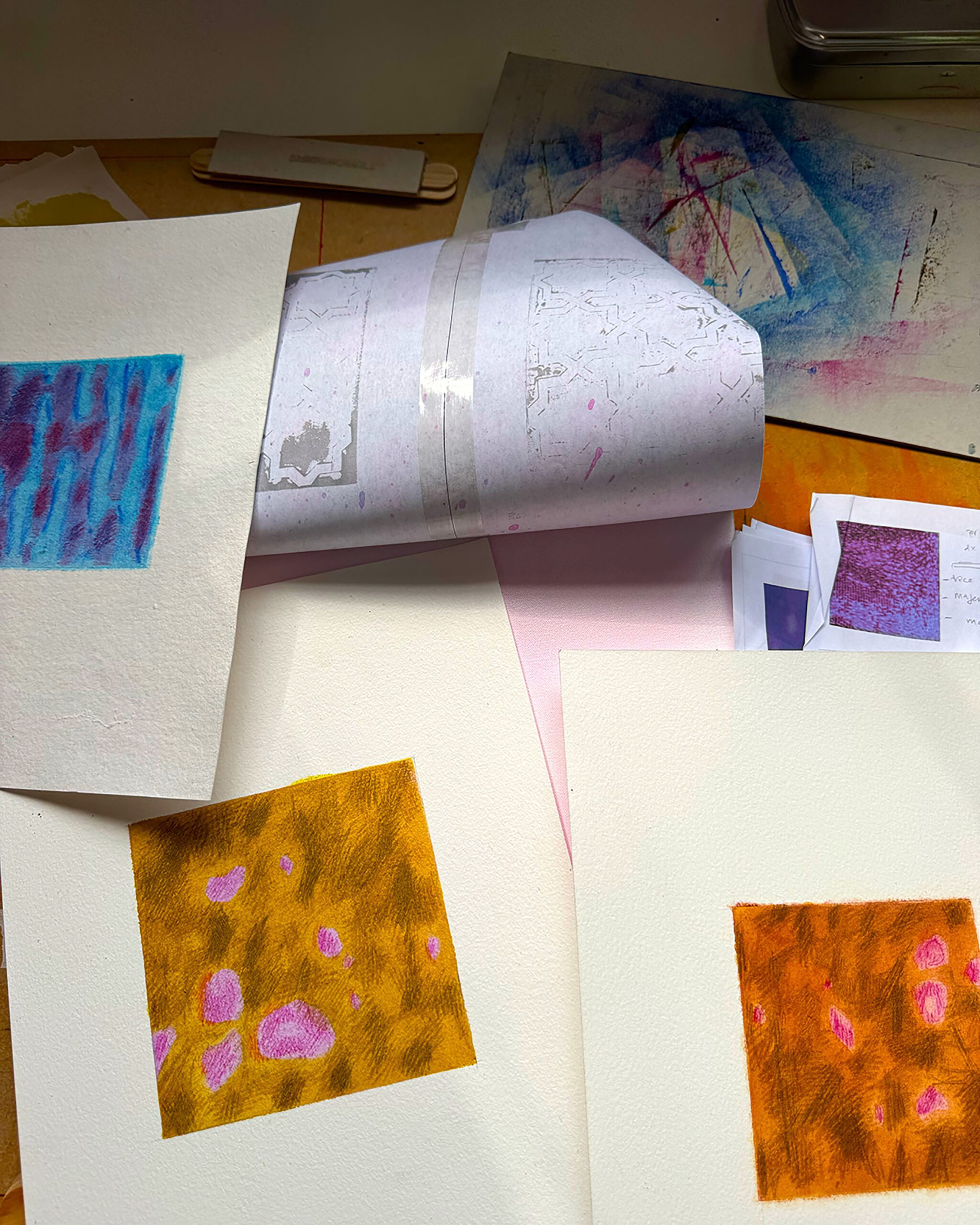
Since being introduced to screen printing at the Slade, I have continued to make prints alongside my painting practice. I use a very simple setup involving stencils, with an emphasis on play and experimentation rather than perfection. Variations in the amount of paint, the pressure applied and the speed of pulling the print produce an imperfect image that can never be replicated. The stencil might shift, while the paint can either flood the screen or leave only the faintest trace. On closer examination during the editing process, the mesh of the screen is revealed—reminiscent of a Jaali disrupted by light.
For a long time I wanted to create a similar sense of spontaneity in my paintings, and have settled on a process where I directly reference these prints. The two disciplines have now merged on the canvas.
I have also worked with ceramics and would like to return to working with the medium at some point. I found that it really helped me to understand the type of artist I am. Method and process is really important to me. Making notes. Logging outcomes. I like to plan. But because we are human and working with materials that will often do their own thing, I’ve also learnt to not get too precious. To welcome and respond to the unexpected.
But ultimately, its about paint. I am drawn to its alchemical nature, to the fact that it comes from the earth, possesses something almost mystical and that it connects me to a long historical tradition. It is a medium that continues to offer endless possibilities.
Congratulations again on winning the ASC Art Prize 2026! Can you walk us through the creation of your winning piece and the story behind it?
I wanted to create a new piece specifically for the gallery space. It is a beautiful space, and I wanted to take full advantage of the opportunity to show work there. I had been working with the reference print in other paintings and wanted to see what else it could offer. I can easily mine the same print for multiple paintings.
I use basic software to edit my prints and choice of colour is intuitive to begin with. For this piece I wanted to zoom even further into the print and introduced a little bit of distortion to create movement across the surface. My use of colour is especially heightened at the moment, as I am thinking about the difference between ambient and high-key lighting, and how intense illumination can still have a soothing quality. I wanted the work to be attention-grabbing and hypnotic, while also offering a sense of transformation.
I was working under some time pressure because the paintings are built up from multiple layers of oil paint using a mono printing type technique and each layer needs to dry thoroughly before the next can be applied. I avoid using drying mediums whenever possible, as they can alter the colour. For this piece, I used acrylic for the first couple of layers, which worked well in the end and I might do this again with future works. Particularly because acrylic has a different binder to oil so you get this warm and cool vibration happening between the two.
But I do prefer oil paint because it gives me more time to manipulate the paint and push its transparent properties. On reflection the time constraint was beneficial. It forced me to be more decisive and helped clarify that I want to continue working within a more defined set of parameters. It is so easy for me to overwork painting.
How do you plan to use the £1,000 prize, and what exciting projects or ideas are you working on next?
I have been thinking of getting back to the print room and doing some etching and lithography courses. So maybe that.
How does having your studio space here at ASC influence your day-to-day workflow and creative process?
For me, having a dedicated space for my work has been essential for me to push my practice forwards. When I go in I treat it like a work day and try to make the most of my time there. Empson Street has been great and that’s why I have been there for so long. Its a peaceful building and I’m in a studio with excellent natural light. I like the sense of community in the building and it is very motivating being amongst people who are dedicated to their practice. Regular open studios have been a very welcome opportunity to pause and reflect on my practice and to connect with other artists and visitors.
If you could go back and give one piece of advice to yourself when you were first starting out as an artist, what would it be?
Do what comes naturally and don’t overthink it.
To learn more about Faza and support her practice, follow her on Instagram
Why not share this article?